We created StudyinEurope.eu to support students like you — with clear information, personalized guidance, and a space to explore calmly. No rankings. No noise. Just tools that help — whether you're browsing on your own or getting help from Leonardo, our AI European Study Advisor.
Graphic and visual communication programs provide the foundational design education for anyone working in visual media — print editorial, digital publishing, brand communications, advertising, and screen-based design.
Graphic and Visual Communication programs in Europe from 18 universities · updated for 2026
Jump to:
Search Graphic and Visual Communication programs
Leonardo
I can help you understand and compare these programs.
A typical week involves typographic exercises, layout critiques of editorial and publication designs, image-making experiments in photography or illustration, and production workshops covering print and screen output. This is the broadest design specialization and the one with the most varied career destinations: graduates work in publishing, in-house brand teams, advertising agencies, design studios, and digital media companies. The European design school tradition — rooted in the Bauhaus, Swiss International Style, Dutch constructivism, and British experimental graphic design — gives graphic design students an intellectual and historical depth that distinguishes European programs from more purely vocational training. Skills developed include typographic craft, grid-based layout, image selection and art direction, visual hierarchy and composition, and production for both print and digital outputs. Students who want to specialize later — in branding, UX, or information design — will find a strong graphic communication foundation opens those doors more easily than entering a narrow specialization directly.
What You Actually Study
Core areas within Graphic and Visual Communication
Typography — typeface selection, type hierarchy, custom lettering, grid systems, and the formal analysis of letterform and spacing decisions
Editorial and publication design — magazine layouts, book design, annual reports, and multi-page information structures for print and digital platforms
Image-making, photography direction, illustration, and the curation and sequencing of images within designed communication systems
Print and digital production — prepress knowledge, color management, screen design output specifications, and design for accessibility standards
Why Europe for Graphic and Visual Communication?
What makes European programs distinctive for this specialization
The European graphic design school tradition is among the most intellectually rigorous in the world — from the Bauhaus in Germany through Swiss typography and Dutch visual communication to contemporary British and Nordic practice. European design schools maintain active connections to publishing industries, cultural institutions, and design studios that create strong internship and graduate placement pathways. The Bologna Process enables degree recognition across 48 EHEA countries, and Creative Europe supports design-adjacent cultural projects. European cities with established design ecosystems — Amsterdam, London, Basel, Stockholm, Copenhagen — provide the professional environment where graphic communication careers are built, and programs in these cities give students access to local industry that programs in smaller markets cannot replicate.
Where It Leads
Career paths for Graphic and Visual Communication graduates
Graphic Designer at a design studio, agency, or in-house creative team working across brand, editorial, and print and digital communication
Art Director at an advertising or communications agency overseeing visual direction across campaign materials and media
Publication Designer or Editorial Designer working with publishers, media companies, or periodicals on book, magazine, or digital editorial design
Visual Identity Designer at a smaller brand studio or as a freelance practitioner developing coherent visual systems for clients
Salary & Career Outcomes
What graduates in this area realistically earn
€22,000 – €42,000 (graphic design and visual communication roles; art direction and senior studio positions range higher with experience)Typical Salary Range
How to Break In
What programs and employers are actually looking for
Graphic design programs admit through portfolio review, and your portfolio needs to show typographic sensitivity, compositional judgment, and genuine problem-solving — not decoration. Work that demonstrates an understanding of how design communicates meaning (rather than simply looking appealing) distinguishes strong portfolios. At master's level, a research interest or conceptual direction adds focus. Work on real briefs where possible — publications you designed for student societies, visual identities for small local clients, or editorial projects you initiated show the ability to work outside the classroom. European design schools increasingly require familiarity with industry-standard software (Adobe suite) as a baseline; the curriculum assumes technical competency and focuses on developing judgment and concept.
Programs You Can Apply to Now
Verified programs from our partner universities — request information directly.
Accepting applications
Film Production
Catalyst – Institute for Creative Arts & Technology Berlin, Germany
Bachelor's English 3 years
EU: €5,528 Per semesterNon-EU: €5,528
Tap to see program details
Film Production Catalyst – Institute for Creative Arts & Technology
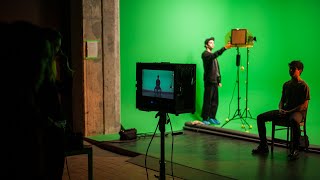
This bachelor's program offers a comprehensive, hands-on training in filmmaking, designed for students who want to develop both technical skills and a distinctive creative voice. In the first year, students rotate through all key production roles — including director, screenwriter, producer, cinematographer, editor, and sound designer — working in small teams on short film projects that reflect real industry conditions. The first year is also available as a standalone Higher Education Certificate. The second year deepens this foundation by focusing on storytelling craft, personal directorial vision, and the cultural and historical contexts of cinema, with projects designed to encourage precision, experimentation, and critical reflection. In the final year, students take complete creative control of an ambitious independent project — whether a short film, documentary, narrative music video, or feature-length production — guiding it from initial concept through to public release via film festivals, screenings, or industry channels. Students also learn to promote and distribute their work within professional contexts, and may choose to complete a written thesis. Throughout all three years, the program balances practical filmmaking skills with critical thinking and collaborative experience, preparing graduates to work confidently across the film and media industries.
To apply, students must have completed high school at a level that would normally allow university entry in their home country. Applicants who do not hold a formal qualification but have relevant professional or life experience may also be considered through a non-standard admissions route. All applicants must submit personal and educational information, proof of prior education, a portfolio, and a personal statement or audio/video introduction. Since the program is taught in English, a minimum proficiency of IELTS 6.0 (or B2 level) is required, which can be demonstrated through a recognized language certificate or a free online test offered by the institution.
Catalyst – Institute for Creative Arts & Technology Berlin, Germany
Bachelor's English 3 years
EU: €6,028 Per semesterNon-EU: €6,028
Tap to see program details
Visual Effects, Video Game and Digital Arts Catalyst – Institute for Creative Arts & Technology
This bachelor's program provides an intensive, project-based training in visual effects and digital arts, preparing students for professional careers in VFX, video game production, and digital storytelling. In the first year, students dive straight into practical work, completing over 15 concept shots or installations, a short film as a VFX artist, and multiple team projects spanning both on-set and post-production environments. Students develop a wide range of technical skills — from 2D animation and matte painting to 3D asset development, texturing, lighting, and green screen work — while building a professional digital portfolio. The first year is also available as a standalone Higher Education Certificate. The second year shifts toward greater depth and creative ownership, with advanced work in motion capture, fluid and particle simulations, digital compositing, and immersive formats such as augmented reality, virtual reality, and projection mapping. In the final year, students bring together their technical expertise and artistic voice to design and produce a major self-initiated project, taking it from concept through to industry-ready presentation. Alongside this, students develop the professional skills needed to pitch, collaborate, and distribute their work within the visual effects and digital arts industries. Throughout all three years, the program balances rigorous technical training with the development of a strong personal creative identity, ensuring graduates are well-prepared to enter the visual effects, gaming, or broader digital media sectors.
To apply, students must have completed high school at a level that would normally allow university entry in their home country. Applicants who do not hold a formal qualification but have relevant professional or life experience may also be considered through a non-standard admissions route. All applicants must submit personal and educational information, proof of prior education, a portfolio, and a personal statement or audio/video introduction. Since the program is taught in English, a minimum proficiency of IELTS 6.0 (or B2 level) is required, which can be demonstrated through a recognized language certificate or a free online test offered by the institution.
Catalyst – Institute for Creative Arts & Technology Berlin, Germany
Bachelor's English 3 years
EU: €5,028 Per semesterNon-EU: €5,028
Tap to see program details
Documentary Photography Catalyst – Institute for Creative Arts & Technology
This bachelor's program offers a hands-on, socially engaged education in documentary photography, preparing students to work as visual storytellers with a strong ethical and cultural awareness. In the first year, students develop the technical foundations of camera work, lighting, editing, and sequencing through intensive, real-world projects, using the city around them as a living classroom for site-specific fieldwork within local communities and cultural spaces. The first year is also available as a standalone Higher Education Certificate. The second year builds on this foundation with more ambitious, conceptually driven projects, where students work alongside community groups and external partners on live briefs, and begin to develop their personal photographic style while learning how documentary work is presented across galleries, publications, and digital platforms. In the final year, students undertake a self-directed major project rooted in a social, political, or cultural context of their choosing, culminating in a public exhibition. Alongside this, they curate a professional portfolio, develop an online presence, and connect with curators, editors, and industry professionals through networking events and portfolio reviews. Throughout all three years, the program places equal emphasis on technical mastery, critical thinking, and ethical responsibility in representing people and communities, equipping graduates to work as independent photographers, freelancers, or cultural practitioners.
To apply, students must have completed high school at a level that would normally allow university entry in their home country. Applicants who do not hold a formal qualification but have relevant professional or life experience may also be considered through a non-standard admissions route. All applicants must submit personal and educational information, proof of prior education, a portfolio, and a personal statement or audio/video introduction. Since the program is taught in English, a minimum proficiency of IELTS 6.0 (or B2 level) is required, which can be demonstrated through a recognized language certificate or a free online test offered by the institution.
Catalyst – Institute for Creative Arts & Technology Berlin, Germany
Master's English 1 year
EU: €6,528 Per semesterNon-EU: €6,528
Tap to see program details
Creative Production (Film) MA Catalyst – Institute for Creative Arts & Technology
This master's program is built around a flexible, self-directed framework that allows students to pursue a personally defined creative project in film, audiovisual art, or related storytelling practices. Rather than following a fixed curriculum, the program is structured around five iterative stages — proposal, contract, production, assessment, and feedback — meaning that the content of each student's experience is largely shaped by the project they bring to the program. The term "creative production" is understood broadly here, encompassing traditional filmmaking and cinematography as well as audiovisual art, multimedia works, narrative and world-building, and creative nonfiction. Students are supported throughout by seminars, workshops, individual and group supervision, and guest lectures, all designed to deepen conceptual thinking and sharpen research methodology rather than provide prescriptive answers.
The program is available as a one-year full-time or two-year part-time course, with an expected commitment of between eight and twelve hours per week, and a significant portion of the work carried out independently. Students also have opportunities to collaborate with peers from acting, film, and music and sound programs, building cross-disciplinary connections alongside their individual practice. This program is particularly well suited to filmmakers, directors, cinematographers, editors, writers, producers, or audiovisual artists who are ready to challenge and expand their creative capabilities within a rigorous and internationally diverse academic environment.
To apply, students must hold a bachelor's degree in a relevant discipline with a strong academic result — equivalent to an upper second-class honors degree or higher. Applicants who do not hold a formal qualification but can demonstrate relevant professional or life experience may also be considered through a non-standard admissions route. All applicants must submit personal and educational information, proof of prior education, a detailed project proposal, a sample of academic or research writing, and a portfolio. Since the program is taught in English, a minimum proficiency of IELTS 6.0 (or B2 level) is required, which can be demonstrated through a recognized language certificate or a free online test offered by the institution. Above all, applicants are expected to have a genuine passion for developing their craft as a filmmaking specialist, audiovisual artist, or storyteller.
This master's program combines creative, technical, and theoretical courses such as Graphic Design Studios I & II, Typography, Branding, and Design for Contemporary Media. Students explore research, seminars, and internships, culminating in two major design projects. The program emphasizes contemporary practice, media integration, and research-driven design.
Applicants must hold a bachelor’s degree or equivalent in Graphic Design, Communication Design, Multimedia Design, Fine Arts, or related fields. Foreign degrees recognized under the Bologna Process or by the school’s Scientific Council are accepted. Candidates with relevant academic, scientific, or professional experience may also apply. Final-year undergraduate students in the required field may submit a declaration of completion.
Bachelor of Arts in Character Animation VIA University College
This bachelor's degree provides students with a strong foundation in 2D, 3D, and stop motion animation, focusing on storytelling, character design, and production pipelines. Students build artistic and technical skills across drawing, concept development, visual storytelling, and animation tools. The program includes a final graduation project and portfolio development. Students choose one of three specialization tracks: 2D Animation, 3D Animation, or Stop Motion in the third year.
Applicants must have completed upper secondary education or equivalent, qualifying them for university studies in their home country. Proof of English proficiency (B2 level) is required, typically via recognized language tests. A portfolio demonstrating artistic and creative skills is mandatory for evaluation. Additional documents include a passport copy, transcripts, CV, and a motivational letter.




 Leonardo
 Accepting applications
 Accepting applications
 Accepting applications
 Accepting applications