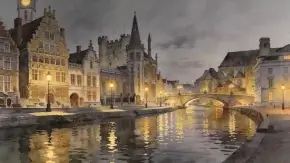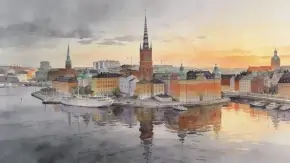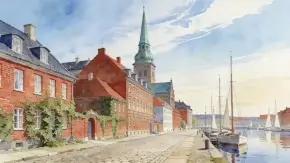



Design decides how we experience products, screens, services, and information — and Europe has shaped that discipline for over a century, from the Bauhaus and Scandinavian functionalism to the design-led companies that are now household names. What makes the continent compelling for students is that this heritage is fused with serious digital innovation: European design schools, distributed across many countries, run on a studio culture where you learn by making, critiquing, and iterating rather than by lectures alone. They sit close to strong creative industries and to design-driven companies like IKEA, Dyson, and Philips, so portfolios get built against real briefs. English-taught programs are increasingly common, and there is a continent-wide emphasis on human-centered and sustainable design that employers everywhere now want. Specializations range from graphic design, branding, and motion graphics to the fast-growing fields of UX/UI, interactive media, and service design. Graduates move into design studios and agencies, in-house product and brand teams, tech companies building digital experiences, and increasingly into service and systems design, where the question is no longer just how something looks but how an entire experience is structured.
Featured Design & Multimedia Programs in Europe
A selection of programs available across Europe — explore details, fees, and requirements.
Graphic Design
Polytechnic University of Leiria Leiria, Portugal
Graphic Design Polytechnic University of Leiria
Visit Program WebsiteProduct Design Engineering
Polytechnic University of Leiria Leiria, Portugal
Product Design Engineering Polytechnic University of Leiria
Visit Program WebsiteBachelor of Arts in Character Animation
VIA University College Viborg, Denmark
Bachelor of Arts in Character Animation VIA University College
Visit Program WebsiteMSc in Strategic Product Design
International Hellenic University Thessaloniki, Greece
MSc in Strategic Product Design International Hellenic University
Visit Program WebsiteWhy Study Design & Multimedia in Europe?
Historic design traditions meeting digital innovation
World-class design schools distributed across Europe
Strong creative industries and agencies
Design-focused companies (IKEA, Dyson, Philips)
Emphasis on sustainable and human-centered design
Popular Specializations
Focus areas within Design & Multimedia
Admission Requirements
What you'll need to apply
Bachelor's Programs
- High school diploma
- Portfolio demonstrating creative abilities
- English proficiency
- Interview often required
Master's Programs
- Bachelor's degree (design, art, or related field)
- Strong portfolio
- Design experience valued
- English proficiency
- Personal statement
What You'll Study
Typical curriculum and coursework
Design fundamentals and theory
Typography and layout
Digital design tools
User experience research
Interactive and motion design
Portfolio development
Client projects
How to Prepare
Tips to strengthen your application
Build a strong portfolio
Master design software (Adobe Creative Suite, Figma)
Study design history and theory
Practice observing and critiquing design
Learn about UX research methods
Follow design trends and leaders
Career Paths
Where a Design & Multimedia degree can take you
Graphic Designer
Create visual communications
UX/UI Designer
Design digital user experiences
Art Director
Lead creative vision for projects
Brand Designer
Develop brand identities
Motion Designer
Create animated content
Design Director
Lead design teams and strategy

Find Your Perfect Design & Multimedia Program
Tell Leonardo what you're looking for and get personalized program recommendations in seconds.
Try asking:
Explore Other Fields
Not quite right? Discover more study areas