Grado programs in Diseño y Multimedia de 20 universidades · actualizado para 2026
Ir a:
Search Grado programs in Diseño y Multimedia
Leonardo
I can help you understand and compare these programs.
A Bachelor's in Diseño y Multimedia in Europe typically runs 3 years in Germany, the Netherlands, Spain, and Belgium — or 4 years in Ireland and the UK — under the Bologna Process, the continent-wide framework that ensures your degree is recognized across 49 countries. That shorter timeline means the total cost of a European Diseño y Multimedia bachelor's is often lower than US or UK equivalents, even before accounting for tuition differences.
Tuition varies by country: public universities in Germany and Norway charge little to nothing even for non-EU students, while the Netherlands typically runs €2,000–€4,000/year for EU students. English-taught Diseño y Multimedia programs are widely available — particularly at Dutch, Scandinavian, and Belgian universities — and usually require IELTS 6.0 or equivalent for admission. Most programs also include Erasmus+ exchange eligibility, letting you spend a semester at another European university as part of your degree.
Browse the Diseño y Multimedia bachelor's programs below to compare fees, duration, language of instruction, and entry requirements side by side. Click any card to see full program details and request information directly from universities currently accepting applications.
Programas a los que Puedes Postular Ahora
Programas verificados de nuestras universidades asociadas — solicita información directamente.
Aceptando solicitudes
Audiovisual Arts and Media Arts
RISEBA University of Applied Sciences Riga, Latvia
Bachelor's English 3 years
EU: €4,500 Per year Non-EU: €5,600
Tap to see program details
Audiovisual Arts and Media Arts RISEBA University of Applied Sciences
Gratis. Se envía directamente al equipo de admisiones de RISEBA University of Applied Sciences.
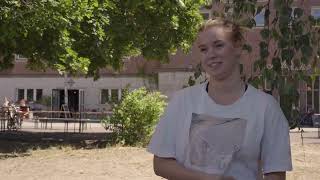
This bachelor's program trains audiovisual journalists, directors, cinematographers and producers for film, television and multimedia. Students learn to take projects from idea to production, lead film crews, use current recording and editing technology, and design image, sound and composition. They also study art history, cultural theory, composition and color psychology, as well as how to plan and promote creative work on the market. Teaching takes place in editing rooms and video and sound studios, and lecturers include working professionals from the audiovisual and media sector.
3 years
Year 1
Acting I
Acting II
Film Dramaturgy
Screenwriting
Principles of Creating a Photographic Image
Music and Sound Design in Film and Multimedia
Film and Multimedia Cinematography I
Film and Multimedia Cinematography II
Film and Multimedia Production I
Film and Multimedia Directing I
Audiovisual Journalism
Lighting Techniques
Video and Sound Recording Techniques
Fundaments of Audiovisual Editing
Image. Space. Time.
Business English
English for Audiovisual Arts and Media Arts
Civil and Environmental Protection
Course Paper I
Year 2
The Dramatic Construction and Production of the TV Series
Multimedia and Immersive Technologies
Audiovisual Montage Aesthetics and Production Processes
Constructions of Composition and Color Psychology
History and Theory of Art and Culture
History of Film
Research Work
Internship I
Course Paper II
specialization courses
Year 3
Production of 360 Degree Cinematic VR
360 Degree Visualization
Sound Directing
Creative Industries in Business and Management
Analysis and Critique of Creative Industries
Legal Aspects of Intellectual Property
Ethics and Social Responsibility
Philosophy
Internship II
Internship III
Bachelor's Thesis
specialization courses
Electives
free electives with no fixed list, which can also be taken at a partner arts university
Specialization
Film and Multimedia Producer — advanced film and multimedia production, with legal aspects of entrepreneurship, accounting, public relations, private funding in culture and project management.
Specialization
Film and Multimedia Cinematographer — advanced cinematography, with gaffing for film and television, documentary aesthetics, photojournalism, film technology and computer graphics.
Specialization
Film and Multimedia Director — advanced directing and directing actors, with documentary aesthetics, film technologies, photojournalism, gaffing and computer graphics.
Specialization
Audiovisual Journalist — fiction and documentary screenwriting, citizen journalism, information design, photojournalism, AI in journalism, copywriting for public relations, and radio journalism and podcasting.
Practice
Three internships, one in year 2 and two in year 3
Course papers in years 1 and 2
Work in editing rooms and video and sound studios
Thesis
Bachelor's thesis in year 3
To apply for this bachelor's program, applicants must have completed recognized secondary or vocational education. Admission is competitive and based on centralized exam results in English, Mathematics, and other core subjects. If English proficiency is below B2 or not verifiable through exams or certificates (like IELTS, TOEFL, Cambridge), a university entrance test is required. All international applicants must pass a creativity entrance exam by writing an essay on one of several topics and also attend an interview with program faculty. Applicants with foreign education are exempt from centralized exams but must take the institution's admission test.
Catalyst – Institute for Creative Arts & Technology Berlin, Germany
Bachelor's English 3 years
EU: €6,000 Per semester Non-EU: €6,000
Tap to see program details
Documentary Photography Catalyst – Institute for Creative Arts & Technology
Gratis. Se envía directamente al equipo de admisiones de Catalyst – Institute for Creative Arts & Technology.
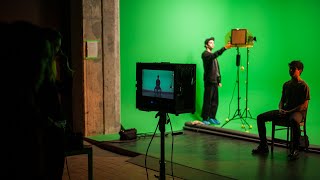
This practice-based bachelor's program develops documentary photography as long-term visual storytelling and social engagement. From the start, students work with real communities in the city, learning to build trust and handle consent, representation and power, while studying how sequencing and editorial choices shape meaning. Students graduate with publicly exhibited work; the first year can be taken on its own as a one-year HE Certificate.
3 years (BA) or 1 year (HE Certificate)full-timeautumn intake
Year 1 (HE Certificate)
composition, lighting, editing and sequencing
ethics of representing people and communities
site-specific fieldwork in the city
short intensive projects
Year 2
longer-term projects from research to exhibition or publication
live briefs with community groups and external partners
how documentary work circulates in galleries, publications and digital platforms
Year 3
self-directed major project on a social, political or cultural theme
final portfolio and online presence
portfolio reviews and guest critiques
Final project
Self-directed major project shown in a public exhibition
Teaching language
English
Documents
Personal and educational information
Proof of previous education
A series of photographs, existing or made for the application
Short personal introduction video
How to apply
Directly with the school through its online application form
Work is shared as online links, not download links
Catalyst – Institute for Creative Arts & Technology Berlin, Germany
Bachelor's English 3 years
EU: €6,500 Per semester Non-EU: €6,500
Tap to see program details
Film Production Catalyst – Institute for Creative Arts & Technology
Gratis. Se envía directamente al equipo de admisiones de Catalyst – Institute for Creative Arts & Technology.
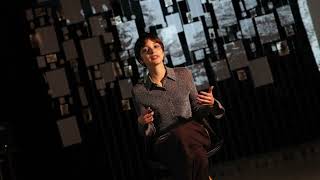
This hands-on bachelor's program teaches students to write, shoot, edit and screen their own films while developing a personal point of view within an international cohort. It covers experimental film, music videos, hybrid film and documentary, in formats from short films to feature-length projects and series. Students graduate with a body of finished work and a network of filmmakers, actors and sound artists; the first year can be taken on its own as a one-year HE Certificate.
3 years (BA) or 1 year (HE Certificate)full-timeautumn intake
Year 1 (HE Certificate)
short films made in small teams under real-world constraints
rotation through director, screenwriter, producer, cinematographer, production designer, editor and sound designer roles
professional equipment and software
Year 2
advanced storytelling and screenwriting
personal directorial approach
historical and cultural contexts of cinema
"The Perfect Minute" project
Year 3
a major self-directed film or media project from concept to release
professional proposal writing
distribution and promotion
Practice
Collaboration with acting and sound students · one-on-one mentorship in the final year
Final project
A major film or media project in the final year, with the option of providing a creative service in a professional setting or writing a thesis
Teaching language
English
Previous education
Secondary-school qualification that gives access to university in the country where it was earned, such as A-levels in the UK or the Abitur in Germany
Applicants without it may be admitted through a non-standard route based on relevant professional or life experience
English
IELTS 6.0 (B2), or the school's free 90-minute online English test
Documents
Personal and educational information
Proof of previous education
A film of up to 3 minutes, existing or made for one of the school's prompts
Short personal introduction video
How to apply
Directly with the school through its online application form
Work is shared as online links, not download links
Catalyst – Institute for Creative Arts & Technology Berlin, Germany
Bachelor's English 3 years
EU: €6,028 Per semester Non-EU: €6,028
Tap to see program details
Visual Effects, Video Game and Digital Arts Catalyst – Institute for Creative Arts & Technology
Gratis. Se envía directamente al equipo de admisiones de Catalyst – Institute for Creative Arts & Technology.
This bachelor's program provides an intensive, project-based training in visual effects and digital arts, preparing students for professional careers in VFX, video game production, and digital storytelling. In the first year, students dive straight into practical work, completing over 15 concept shots or installations, a short film as a VFX artist, and multiple team projects spanning both on-set and post-production environments. Students develop a wide range of technical skills — from 2D animation and matte painting to 3D asset development, texturing, lighting, and green screen work — while building a professional digital portfolio. The first year is also available as a standalone Higher Education Certificate. The second year shifts toward greater depth and creative ownership, with advanced work in motion capture, fluid and particle simulations, digital compositing, and immersive formats such as augmented reality, virtual reality, and projection mapping. In the final year, students bring together their technical expertise and artistic voice to design and produce a major self-initiated project, taking it from concept through to industry-ready presentation. Alongside this, students develop the professional skills needed to pitch, collaborate, and distribute their work within the visual effects and digital arts industries. Throughout all three years, the program balances rigorous technical training with the development of a strong personal creative identity, ensuring graduates are well-prepared to enter the visual effects, gaming, or broader digital media sectors.
To apply, students must have completed high school at a level that would normally allow university entry in their home country. Applicants who do not hold a formal qualification but have relevant professional or life experience may also be considered through a non-standard admissions route. All applicants must submit personal and educational information, proof of prior education, a portfolio, and a personal statement or audio/video introduction. Since the program is taught in English, a minimum proficiency of IELTS 6.0 (or B2 level) is required, which can be demonstrated through a recognized language certificate or a free online test offered by the institution.
This bachelor's program integrates computer science and digital arts with a strong focus on game development and interactive design. Students gain skills in programming, algorithms, databases, and artificial intelligence while also studying visual and sound design, 3D modeling, cinematography, and motion graphics. The curriculum includes web design, user interface and user experience design, and entrepreneurship. Practical training is emphasized through projects, portfolio creation, and a two-part bachelor thesis. Elective courses allow for specialization in areas such as game engine architecture, matte painting, and level design.
To apply for this bachelor's program, applicants must submit a secondary education diploma with final grades, a passport copy, a motivational letter written without AI assistance, and proof of English proficiency at a B2 level. Accepted certificates include TOEFL iBT (72–94), IELTS (5.5–6.5), PTE (59–75), and Duolingo (100–125), or students can opt for a free online test provided by the university. A minimum GPA of 60% of the maximum is required. Applicants with a gap of three or more years since graduation may need to take additional tests. All documents must be clear, color scans. Learn more about grades in Europe at: https://www.studyineurope.eu/grades/.
Bachelor's Degree in Computer Graphic Arts VIA University College
This bachelor's degree provides students with a strong foundation in 2D, 3D, and stop motion animation, focusing on storytelling, character design, and production pipelines. Students build artistic and technical skills across drawing, concept development, visual storytelling, and animation tools. The program includes a final graduation project and portfolio development.
Students choose one of three specialization tracks: 2D Animation, 3D Animation, or Stop Motion in the third year.
Applicants must have completed upper secondary education or equivalent, qualifying them for university studies in their home country. Proof of English proficiency (B2 level) is required, typically via recognized language tests.
A portfolio demonstrating artistic and creative skills is mandatory for evaluation.
Additional documents include a passport copy, transcripts, CV, and a motivational letter.
Interior Design Magdalena Abakanowicz – University of the Arts Poznań
This is a three-year, full-time program that offers comprehensive training in interior and exhibition design. Students choose a main studio and two supplementary studios from a wide selection, allowing for personalized and diverse learning paths. The curriculum combines studio work with theoretical courses, humanities, and software training, supported by drawing and fine arts classes. The program emphasizes both creative expression and professional readiness, preparing students to become responsible, critically-minded interior and exhibition designers capable of balancing tradition with innovation.
To apply for this program, candidates must submit an application form with a photo, a cover letter, a legalized or apostilled and translated high school certificate, and a portfolio with a motivation letter. An English language certificate (e.g., IELTS 5+, TOEFL 60+, FCE, CAE) is required unless the applicant comes from an English-speaking country or has completed studies taught in English—supported by a diploma confirming the language of instruction. Proof of health insurance for the full academic year in Poland or a statement of intent to obtain it upon arrival is also required, along with confirmation of the enrollment fee payment.
This bachelor's program connects the performing arts with contemporary visual arts, centering on dressing the body and the performative in response to the way theatre, performance, dance, opera, and film have increasingly merged into hybrid artistic forms combining multiple disciplines. Students learn to develop a clear design concept from personal inspiration or a text, using a variety of techniques to bring these ideas, concepts, and costumes to life, with an expectation that students engage seriously with social themes and the contemporary art world.
An extensive theoretical foundation supports students in developing a personal, critical perspective on the performing arts in all their forms, while a dedicated team of professionals active in various areas of contemporary performing arts provides supervision throughout. The program focuses on developing drawing skills, perception, visual communication, and the full range of profession-specific techniques needed to design and realize costumes, complemented by practical exercises in text analysis, dramaturgy, semiotics, character analysis, scenography, technical research, and collaborative work. The theoretical framework further includes research methodology, art history, art theory, techniques for analyzing theatre history, and the study of costume in film and costume history more broadly.
Through collaborative projects, internships, workshops, and practical exercises, students gain hands-on experience and a wide range of professional tools, preparing them to continue toward a master's degree centered on independent artistic research, in which a final graduation project is presented in a personal, professional manner within a multidisciplinary context spanning visual and performing arts. Graduates of the full program can go on to work as autonomous artists or as costume designers, seeking collaborations across the world of performing arts, live performance, film, and television.
Applicants need a secondary education diploma or equivalent qualification that provides access to higher education, with the specific accepted qualification depending on the applicant's country of education; applicants from the Netherlands need a VWO diploma or an HBO propaedeutic certificate, as a HAVO or MBO diploma does not provide access to the program, while applicants from other countries need a diploma recognized as providing access to university-level study in their home country. Applicants holding a Chinese diploma must additionally complete an APS screening in Beijing, both to verify their documents and to obtain a student visa.
Applicants must also demonstrate sufficient knowledge of the language of instruction at the B2 level. For Dutch, this can be shown by having completed at least one year of Dutch-language secondary education, having earned at least 60 credits in Dutch-language higher education, or holding a recognized B2-level language certificate; for English, this can be shown through certain qualifying diplomas from Dutch- or English-language secondary or higher education, or through an accepted language certificate such as IELTS Academic, TOEFL iBT, Cambridge English, ITACE, or Pearson PTE Academic at the required minimum score.
Admission to the program is only possible after passing an artistic entrance exam, which begins with a digital pre-selection based on a submitted portfolio. Applicants who pass this pre-selection are invited to a multi-day artistic entrance exam, combining studio-based artistic assignments with a dedicated drawing assignment, which can be completed either in person or digitally, though in-person participation is recommended. The exam assesses the applicant's creativity and imagination, interest in general culture and in art, design, and visual culture specifically, drawing skills, and ability to express ideas both visually and verbally.
Jewellery Design and Gold- and Silversmithing Royal Academy of Fine Arts Antwerp
This bachelor's program explores jewellery and other wearable accessories as expressions of the universal, timeless human need for ornament, treating these accessories as objects that convey status, style, and culture while serving as witnesses to broader social, cultural, and technological developments. The program prepares students for a versatile profession rooted in a rich tradition of craftsmanship while staying attuned to contemporary developments in the field, balancing artistic studio practice with theoretical study and drawing.
Students receive guidance from a team of experienced, professional artists and designers as they develop their own personal artistic practice in accessory design, with considerable attention devoted to the technical skills and practical knowledge the profession requires, including working with metals, gemstones, and other materials, understanding jewellery history, and using 3D computer drawing tools. The program encourages curiosity and imagination alongside the development of research skills, concept development, and self-reflection, supported by study visits, workshops, projects, lectures, and supervision from international guest lecturers, while research methodology, art history, and art theory provide the necessary theoretical grounding.
Graduates of the full program, including subsequent master's-level study, are prepared to work as independent designers of jewellery and wearable accessories, or to pursue collaborations within the world of jewellery design or goldsmithing.
Applicants need a secondary education diploma or equivalent qualification that provides access to higher education, with the specific accepted qualification depending on the applicant's country of education; applicants from the Netherlands need a VWO diploma or an HBO propaedeutic certificate, as a HAVO or MBO diploma does not provide access to the program, while applicants from other countries need a diploma recognized as providing access to university-level study in their home country. Applicants holding a Chinese diploma must additionally complete an APS screening in Beijing, both to verify their documents and to obtain a student visa.
Applicants must also demonstrate sufficient knowledge of the language of instruction at the B2 level. For Dutch, this can be shown by having completed at least one year of Dutch-language secondary education, having earned at least 60 credits in Dutch-language higher education, or holding a recognized B2-level language certificate; for English, this can be shown through certain qualifying diplomas from Dutch- or English-language secondary or higher education, or through an accepted language certificate such as IELTS Academic, TOEFL iBT, Cambridge English, ITACE, or Pearson PTE Academic at the required minimum score.
Admission to the program is only possible after passing an artistic entrance exam, which begins with a digital pre-selection based on a submitted portfolio. Applicants who pass this pre-selection are invited to a multi-day artistic entrance exam, combining studio-based artistic assignments with a dedicated drawing assignment, which can be completed either in person or digitally, though in-person participation is recommended. The exam assesses the applicant's creativity and imagination, interest in general culture and in art, design, and visual culture specifically, drawing skills, and ability to express ideas both visually and verbally.
Design and Art - Major in Design Free University of Bozen-Bolzano
This bachelor's degree offers a comprehensive and flexible curriculum that combines foundational theory, hands-on practice, and interdisciplinary projects. Students begin with courses in product design, visual communication, history, theory, and technical drawing. They choose from specialized modules in photography, digital design, and audiovisual media, and attend seminars and elective courses tailored to their interests. The program emphasizes project-based learning, requiring four major projects, including options in product design or visual communication. Students also participate in at least five technical workshops, such as carpentry, metal, digital modeling, or printmaking, to build practical skills. The program culminates with a degree project and is structured to support interdisciplinary thinking, creativity, and professional development.
To be admitted to the program, applicants must hold a secondary school leaving certificate issued after 12 years of education and meet specific language requirements. The program is trilingual, with instruction in German, Italian, and English. At the time of admission, applicants must demonstrate B2 proficiency in two of the three languages; no prior knowledge is required for the third. To graduate, students must reach C1 in two languages and B2 in the third. Language proficiency can be demonstrated through school or university diplomas, recognized language certificates, or institutional exams. Students with no prior knowledge of the third language must attend intensive pre-semester language courses to begin their learning path.
Intermedia Magdalena Abakanowicz – University of the Arts Poznań
This is a three-year, full-time program focused on interdisciplinary artistic practice that blends various media such as photography, film, performance, sound, and new technologies. Students are encouraged to experiment, question conventions, and explore both traditional and emerging forms of expression. The curriculum includes hands-on workshops, theory of media arts, and opportunities to work in unconventional spaces and public contexts. A specialization in Experimental Film is also offered, providing training in filmmaking, digital post-production, and contemporary film language. The program supports both individual and collaborative projects, preparing students for careers in audiovisual arts, media, and independent artistic practice.
To apply for this program, candidates must submit an application form with a photo, a cover letter, a legalized or apostilled and translated high school certificate, and a portfolio with a motivation letter. An English language certificate (e.g., IELTS 5+, TOEFL 60+, FCE, CAE) is required unless the applicant comes from an English-speaking country or has completed studies taught in English—supported by a diploma confirming the language of instruction. Proof of health insurance for the full academic year in Poland or a statement of intent to obtain it upon arrival is also required, along with confirmation of the enrollment fee payment.
Bachelor's Degree in Graphic Storytelling VIA University College
This 4-year bachelor's program develops students' skills in visual storytelling, illustration, comics, and narrative design. The study track includes coursework across 8 semesters, with the 7th semester dedicated to an internship. Students gain hands-on experience in combining art and narrative techniques for publishing, digital platforms, and creative industries.
Applicants must submit a portfolio demonstrating drawing and storytelling abilities, along with a motivational letter. Admission requires completion of upper secondary education equivalent to Danish qualifications. Proficiency in English (minimum B2 level) is required and must be documented. Selection is competitive and based on artistic potential assessed through the admission assignment and portfolio.
Los grados en diseño y multimedia en Europa tienen una duración de tres años (cuatro en algunos países). El primer año suele ser de carácter fundacional: dibujo, teoría del color, historia del diseño e introducción al software principal. En el segundo y tercer año se profundiza en la especialización, con proyectos reales del sector, trabajos colaborativos y un portfolio final o proyecto de graduación.
La educación en diseño en Europa tiene una sólida cultura de la crítica: presentaciones periódicas en las que debes defender tu trabajo ante tutores y compañeros. Al principio puede resultar incómodo, pero es esencial para el ejercicio profesional.
Grado in Diseño y Multimedia: year by year
Year 1
Fundamentos: dibujo, color, composición e historia del diseño
Introducción a las principales herramientas de software
Proyectos y talleres interdisciplinares
Primera revisión de portfolio
Year 2
Módulos de especialización (gráfico, UX, motion o interacción)
Proyectos reales con socios del sector
Preparación para prácticas o estancias profesionales
Crítica de portfolio a mitad del programa
Year 3
Proyecto de graduación principal
Módulos de contexto profesional y práctica
Desarrollo del portfolio final
Exposición o muestra de graduación
¿Por Qué Europa para Diseño y Multimedia?
Las escuelas de diseño europeas se enmarcan en ricas culturas visuales, desde la tipografía suiza hasta el conceptualismo holandés y las tradiciones de ilustración francesas. La proximidad a escenas y estudios de diseño activos ofrece oportunidades de networking y prácticas que el estudio a distancia no puede replicar.
Encuentra Tu Programa Ideal de Diseño y Multimedia
Dile a Leonardo lo que buscas y recibe recomendaciones de programas personalizadas en segundos.
Intenta preguntar:
Study Destinations
In-depth country guides — programs, costs, language requirements, and admission steps.


 Ask Leonardo - Your AI Advisor

 Aceptando solicitudes
 Aceptando solicitudes
 Aceptando solicitudes
























