I can help you understand and compare these programs.
Conservatory TraditionEuropean conservatories have trained the world's finest musicians for over three centuries — that legacy is alive
Performance OpportunitiesHundreds of opera houses, concert halls, and venues offer performance experience beyond the classroom
World-Class FacultyStudy under internationally recognized performers, conductors, and directors at Europe's leading academies
Diverse TraditionsEuropean programs span classical, contemporary, electronic, folk, and cross-cultural performance practice
Europe is, by any reasonable measure, the historical heart of Western music and the performing arts — the continent that gave the world its classical canon and that still operates many of its most prestigious conservatories, opera houses, and concert halls. For a performer, composer, or conductor, that legacy is not a museum piece; it is a living professional ecosystem. Studying here means training with faculty who perform internationally, in cities where you can hear world-class ensembles several nights a week, and within a culture that still funds the arts seriously. The tradition is deep in classical performance, composition, and conducting, but European programs are also strong in jazz, contemporary and electronic music, opera, music production, and applied fields like music education and music therapy. A growing number of programs teach in English, and the continent's sheer density means students absorb many national schools and styles rather than a single one. Auditions and portfolios matter more than test scores here, which suits practitioners. Graduates build careers as performers and composers, but also as teachers, producers, music therapists, orchestral and festival administrators, and creators working across film, games, and the wider creative industries.
Programs You Can Apply to Now
Verified programs from our partner universities — request information directly.
Accepting applications
Acting
Catalyst – Institute for Creative Arts & Technology Berlin, Germany
Bachelor's English 3 years
EU: €6,000 Per semester Non-EU: €6,000
Tap to see program details
Acting Catalyst – Institute for Creative Arts & Technology
Free. Sent directly to the admissions team at Catalyst – Institute for Creative Arts & Technology.
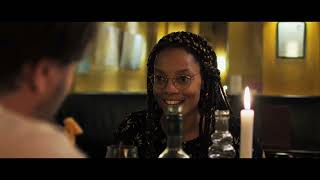
This practical, project-based bachelor's program prepares actors for stage and screen, with frequent performances, rotating cast and crew roles and work with film, music and photography students. Training covers acting technique, voice and movement, screen work and the professional side of the industry, taught by working professionals. The first year can be taken on its own as a one-year HE Certificate.
3 years (BA) or 1 year (HE Certificate)full-timeautumn intake
Year 1 (HE Certificate)
acting, voice and movement technique
performing for camera and stage
screenwriting and story structure basics
showreel and live performance
Year 2
an acting company formed with classmates to write, direct and perform original work
advanced character, movement and vocal work
contemporary tools and technologies
Year 3
major and minor self-directed projects from pitch to performance
audience engagement
professional portfolio and public presence
Practice
Weekly stage or screen performances in the first year
Collaboration with film, music and photography students
Teaching language
English
Previous education
Secondary-school qualification that gives access to university in the country where it was earned, such as A-levels in the UK or the Abitur in Germany
Applicants without it may be admitted through a non-standard route based on relevant professional or life experience
English
IELTS 6.0 (B2), or the school's free 90-minute online English test
Documents
Personal and educational information
Proof of previous education
Audition tape of one monologue from the school's audition selection
Written statement of motivation (450 to 500 words, PDF)
How to apply
Directly with the school through its online application form
Work is shared as online links, not download links
Selection
Review of the audition tape; shortlisted applicants submit one or two further tapes in response to feedback
RISEBA University of Applied Sciences Riga, Latvia
Master's English 2 years
EU: €4,100 Per year Non-EU: €4,700
Tap to see program details
Audiovisual and Immersive Technologies Art RISEBA University of Applied Sciences
Free. Sent directly to the admissions team at RISEBA University of Applied Sciences.
This master's degree prepares research-oriented specialists who create artworks with virtual, augmented and mixed reality, artificial intelligence, game design and data visualization. The curriculum is built around practice-based research and combines the humanities with business. Graduates can go on to doctoral study or work independently as professionals.
4 semesters120 ECTS
Semester 1 (30 ECTS)
Conceptual Thinking and Practice-Based Research8 ECTS
Audio Culture7 ECTS
Visual Culture and the Aesthetics of Immersive New Media15 ECTS
international students also take Latvian Language for International Students3 ECTS
Semester 2 (30 ECTS)
Creative Industries7 ECTS
Interactive Art and Multimedia Performance15 ECTS
thematic strand, part I8 ECTS
students who have not completed civil and environmental defence courses at a previous level of study also take State, Environmental, and Civil Defence3 ECTS
Semester 3 (30 ECTS)
Media Theory and Research Methods8 ECTS
thematic strand, part II19 ECTS
free elective3 ECTS
Electives — choose 3 ECTS from a wider elective catalogue, for example
Design Thinking in Public Relations
Painting: Space and Colour
Innovation Strategy and Digital Media Communication
Creativity and Design Thinking
Digital Transformation and Social Media
Innovation and Creativity in Business
Coaching, Mentoring, and Supervision
Financial Management and Project Cost Management
Specialization
Digital Storytelling and Interactive Narratives in Audiovisual Media Art — advanced study of storytelling and interactive narrative structures in audiovisual media art.
Specialization
Immersive Technologies in Audiovisual Media Art – Extended Reality (XR) Art, Artificial Intelligence, and Game Design — advanced study of artistic work with extended reality, artificial intelligence and game design.
Thesis
Master's thesis (30 ECTS) in semester 4, combining a theoretical study with a full-scale practical work, such as a short film, short documentary, experimental film, video installation, animation film, 3D video graphic, multimedia performance, virtual reality work, or AI and 3D interactive installation
To apply for this master's program in new media and audiovisual art, candidates must hold a bachelor's degree in humanities or arts, or a degree in another field with additional qualifications such as relevant work experience in creative industries or coursework in art history, theory, or philosophy. All applicants must submit a portfolio of 3–5 creative works and a written project proposal related to their chosen specialization—either audiovisual media, multimedia performances, digital art, or sound art/electronic music. English proficiency at a B2 level is required and can be proven via prior education or international exams like IELTS or TOEFL. An entrance examination is mandatory.
RISEBA University of Applied Sciences Riga, Latvia
Bachelor's English 3 years
EU: €4,500 Per year Non-EU: €5,600
Tap to see program details
Audiovisual Arts and Media Arts RISEBA University of Applied Sciences
Free. Sent directly to the admissions team at RISEBA University of Applied Sciences.
This bachelor's program trains audiovisual journalists, directors, cinematographers and producers for film, television and multimedia. Students learn to take projects from idea to production, lead film crews, use current recording and editing technology, and design image, sound and composition. They also study art history, cultural theory, composition and color psychology, as well as how to plan and promote creative work on the market. Teaching takes place in editing rooms and video and sound studios, and lecturers include working professionals from the audiovisual and media sector.
3 years
Year 1
Acting I
Acting II
Film Dramaturgy
Screenwriting
Principles of Creating a Photographic Image
Music and Sound Design in Film and Multimedia
Film and Multimedia Cinematography I
Film and Multimedia Cinematography II
Film and Multimedia Production I
Film and Multimedia Directing I
Audiovisual Journalism
Lighting Techniques
Video and Sound Recording Techniques
Fundaments of Audiovisual Editing
Image. Space. Time.
Business English
English for Audiovisual Arts and Media Arts
Civil and Environmental Protection
Course Paper I
Year 2
The Dramatic Construction and Production of the TV Series
Multimedia and Immersive Technologies
Audiovisual Montage Aesthetics and Production Processes
Constructions of Composition and Color Psychology
History and Theory of Art and Culture
History of Film
Research Work
Internship I
Course Paper II
specialization courses
Year 3
Production of 360 Degree Cinematic VR
360 Degree Visualization
Sound Directing
Creative Industries in Business and Management
Analysis and Critique of Creative Industries
Legal Aspects of Intellectual Property
Ethics and Social Responsibility
Philosophy
Internship II
Internship III
Bachelor's Thesis
specialization courses
Electives
free electives with no fixed list, which can also be taken at a partner arts university
Specialization
Film and Multimedia Producer — advanced film and multimedia production, with legal aspects of entrepreneurship, accounting, public relations, private funding in culture and project management.
Specialization
Film and Multimedia Cinematographer — advanced cinematography, with gaffing for film and television, documentary aesthetics, photojournalism, film technology and computer graphics.
Specialization
Film and Multimedia Director — advanced directing and directing actors, with documentary aesthetics, film technologies, photojournalism, gaffing and computer graphics.
Specialization
Audiovisual Journalist — fiction and documentary screenwriting, citizen journalism, information design, photojournalism, AI in journalism, copywriting for public relations, and radio journalism and podcasting.
Practice
Three internships, one in year 2 and two in year 3
Course papers in years 1 and 2
Work in editing rooms and video and sound studios
Thesis
Bachelor's thesis in year 3
To apply for this bachelor's program, applicants must have completed recognized secondary or vocational education. Admission is competitive and based on centralized exam results in English, Mathematics, and other core subjects. If English proficiency is below B2 or not verifiable through exams or certificates (like IELTS, TOEFL, Cambridge), a university entrance test is required. All international applicants must pass a creativity entrance exam by writing an essay on one of several topics and also attend an interview with program faculty. Applicants with foreign education are exempt from centralized exams but must take the institution's admission test.
Catalyst – Institute for Creative Arts & Technology Berlin, Germany
Bachelor's English 3 years
EU: €6,000 Per semester Non-EU: €6,000
Tap to see program details
Creative Audio Production and Sound Engineering Catalyst – Institute for Creative Arts & Technology
Free. Sent directly to the admissions team at Catalyst – Institute for Creative Arts & Technology.
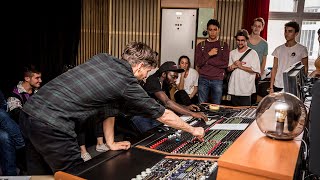
This bachelor's program combines technical training, creative practice and critical thinking for future music producers and sound engineers. Students learn in industry-standard studios through workshops with working professionals, solo projects that cover every step from idea to release, and collaborative work, producing singles, EPs, music for film, engineering projects and a studio album. The first year can be taken on its own as a one-year HE Certificate.
3 years (BA) or 1 year (HE Certificate)full-timeautumn intake
Year 1 (HE Certificate)
recording, mixing and production
psychoacoustics and acoustics
work across several DAWs and hardware systems
Year 2
advanced recording, mixing and mastering
large-scale studio sessions with bands
sequencing, synthesis and sampling
emerging technologies, including AI in production
Year 3
a self-designed project from concept to public release
full production workflows, alone and in teams
leadership roles in studio production
Practice
29 or more studios and production suites, including recording, mastering, Dolby Atmos and radio studios
Final project
A self-designed project taken from concept to public release
Teaching language
English
Previous education
Secondary-school qualification that gives access to university in the country where it was earned, such as A-levels in the UK or the Abitur in Germany
Applicants without it may be admitted through a non-standard route based on relevant professional or life experience
Others usually need to complete a short course first
English
IELTS 6.0 (B2), or the school's free 90-minute online English test
Documents
Personal and educational information
Proof of previous education
Two original pieces made in a DAW, each with a short description (DJ mixes are not accepted)
Personal introduction, as a written statement of motivation or a video or audio clip
How to apply
Directly with the school through its online application form
Work is shared as online links, not download links


 Ask Leonardo - Your AI Advisor

 Accepting applications
 Accepting applications
























